VILLA SANTAI — ARABIAN RANCHES
Faiq Residence · Private Family Residence
A House of Quiet Light.
A two-storey family villa in Arabian Ranches — designed as a study in restraint, where natural materials, soft daylight, and considered proportion replace the usual vocabulary of luxury.
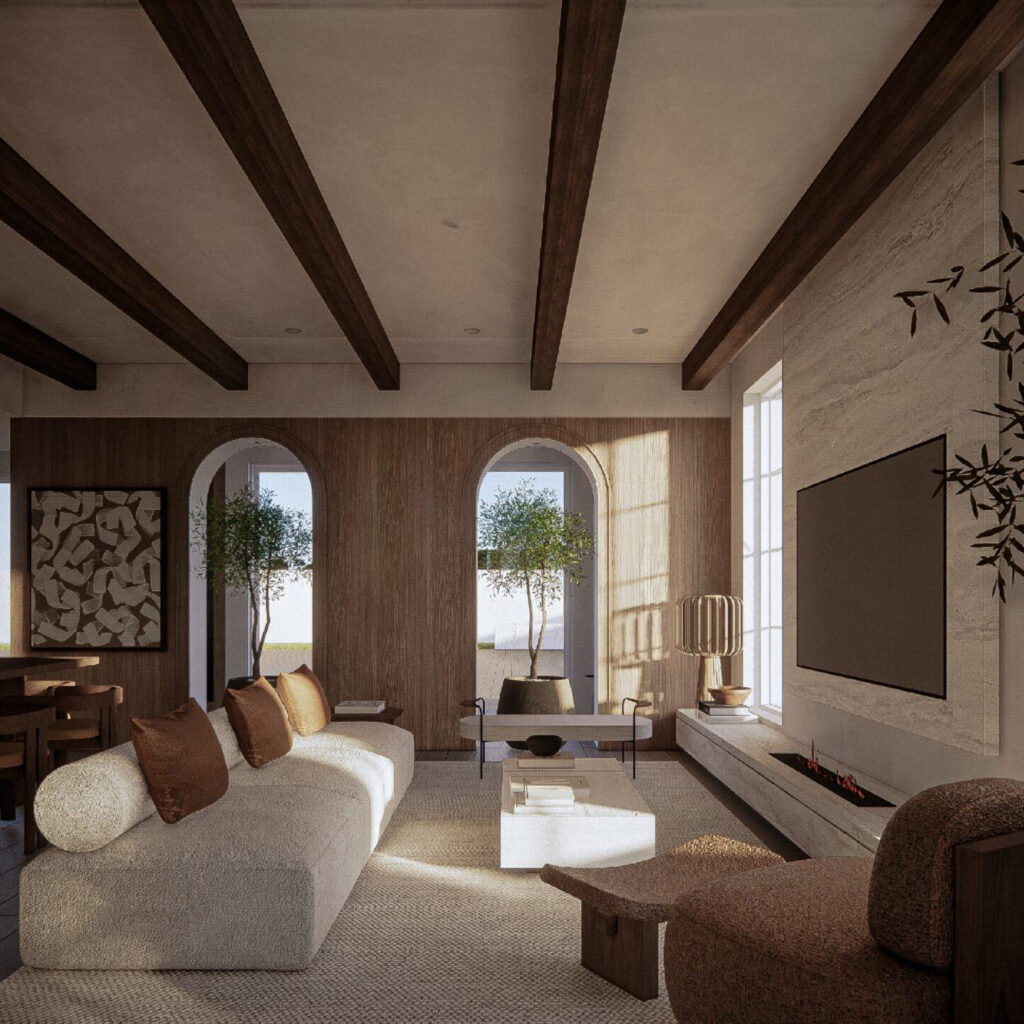
The ground floor is organised around a single open-plan volume — living, dining, and kitchen flowing as one continuous room beneath exposed dark timber beams. Two arched openings carry the eye through to the bar pavilion beyond, while floor-to-ceiling sheers soften the desert light into something gentler. Bookmatched travertine forms the media wall — a single horizontal plane that grounds the space without dominating it.
The Arrival.
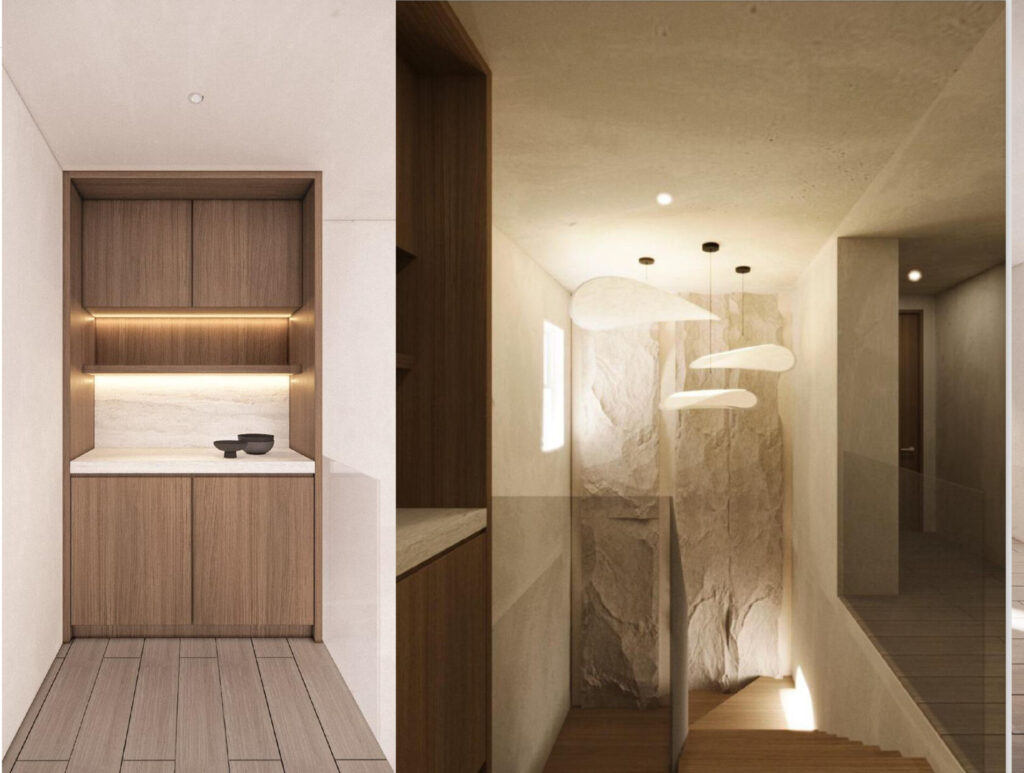
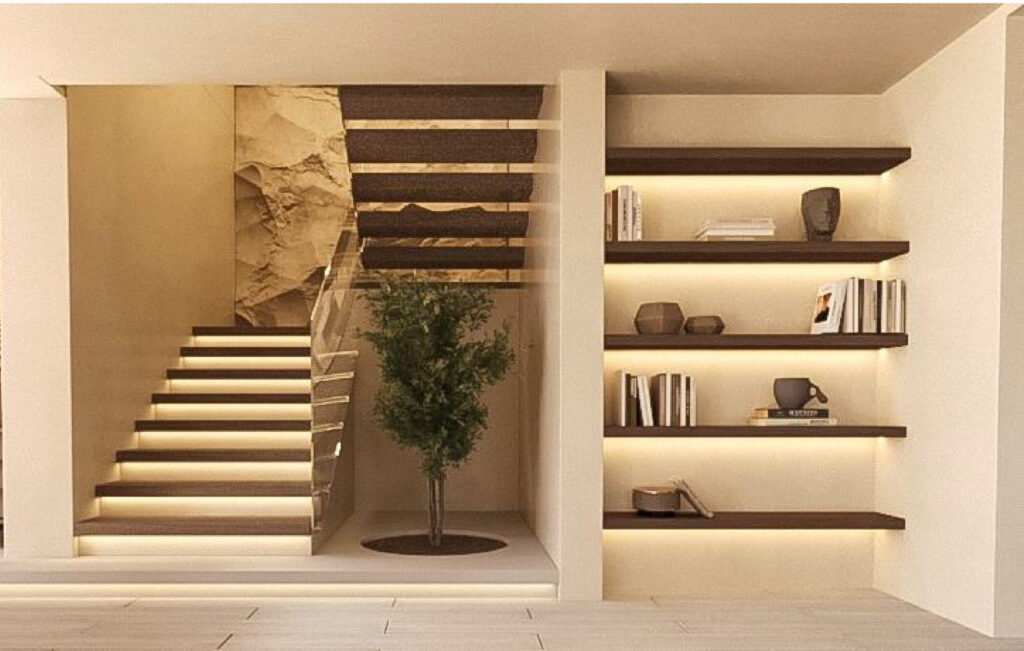
The foyer sets the tone for the entire residence. A hand-finished raw stone wall greets the entry — a single sculptural slab lit from beneath the floating timber stair — while a recessed shelving wall in dark smoked oak holds books and ceramics like a quiet gallery. Concealed warm light, natural texture, considered emptiness. Everything that follows reads off this opening note.
The Living Spine.
The ground floor is organised around a single open-plan volume — living, dining, and kitchen flowing as one continuous room beneath exposed dark timber beams. Two arched openings carry the eye through to the bar pavilion beyond, while floor-to-ceiling sheers soften the desert light into something gentler. Bookmatched travertine forms the media wall — a single horizontal plane that grounds the space without dominating it.
Dining as the Centre of Things.
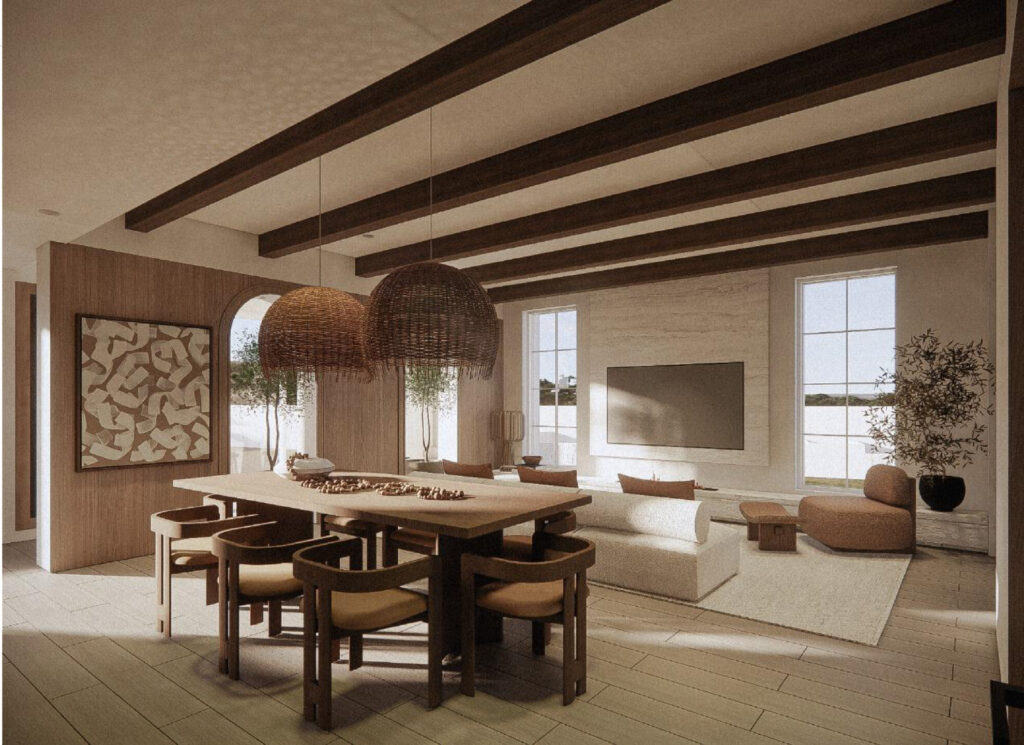
A long oak dining table sits at the heart of the open plan, framed by twin woven dome pendants and a sculptural artwork panel. The chairs were chosen for warmth — cane-backed timber, soft cushions, low arms — and the table is positioned to read the kitchen and the living room equally. This is the room the family lives in.
The Sculptural Kitchen.
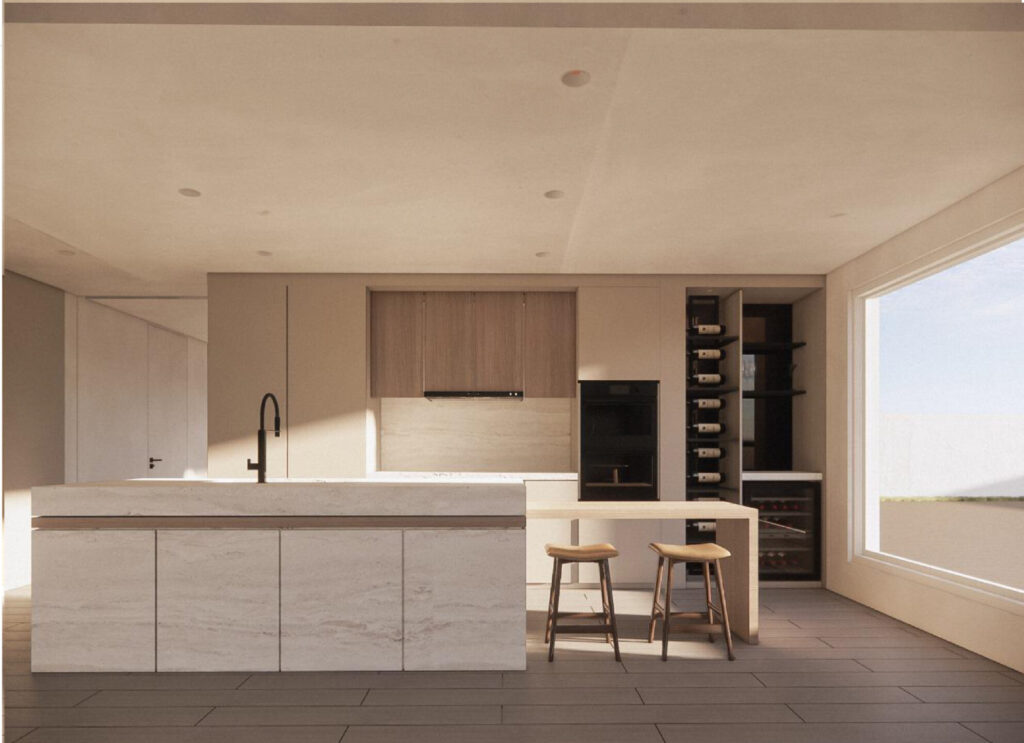
A bookmatched travertine island anchors the kitchen — a single sculptural mass with concealed joinery and no visible hardware. Behind it, a run of pale oak cabinetry frames a recessed cooking niche in brushed steel. A glazed wine column to the right holds the bottles like a vertical gallery, set against smoked oak millwork. Two stools tuck under the island for casual mornings; a generous picture window pulls the landscape directly into the room.
The Pantry.
Tucked just off the kitchen, a compact pantry in pale oak handles the quiet work — concealed storage above and below a stone counter, a recessed niche washed in warm light, and a pair of dark ceramic bowls left as the room’s only ornament. The corridor beyond turns the back-of-house into a small architectural moment in its own right.
The Family Room.
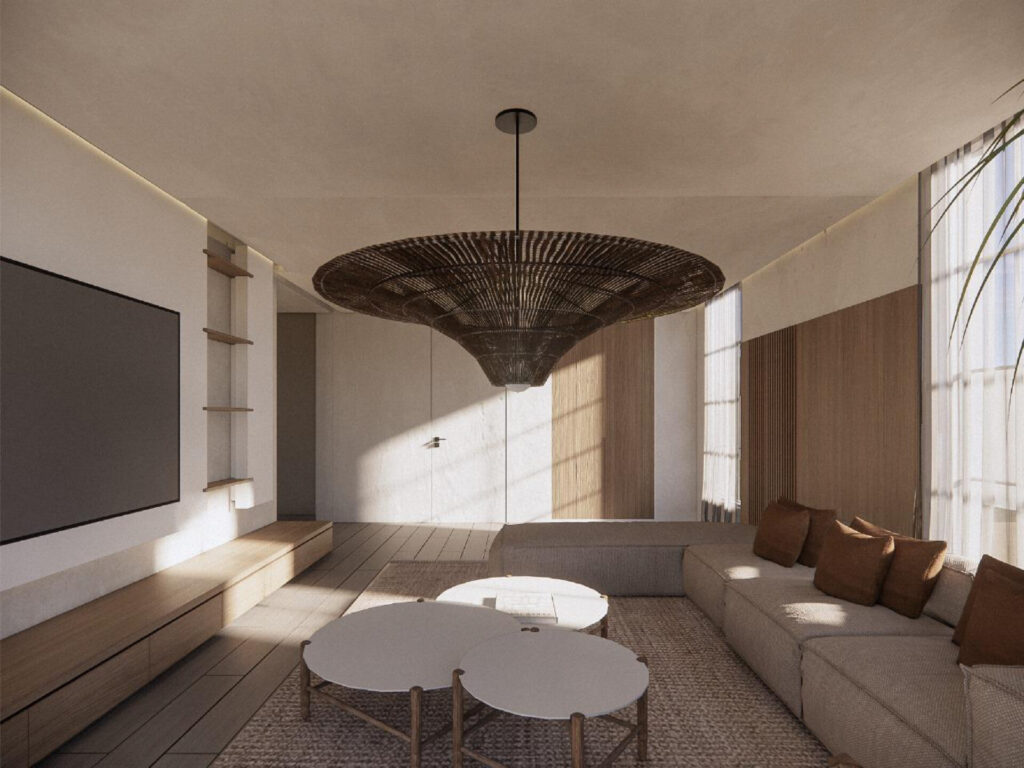
A second, more private living room sits behind the formal spine — designed as the room the family actually retreats to. A deep modular sofa in soft linen wraps the perimeter, low timber slat panelling lines the walls, and a sculptural rattan dome chandelier floats at the centre. The full-height sheers diffuse the afternoon light into something almost cinematic.
A Room That Breathes.
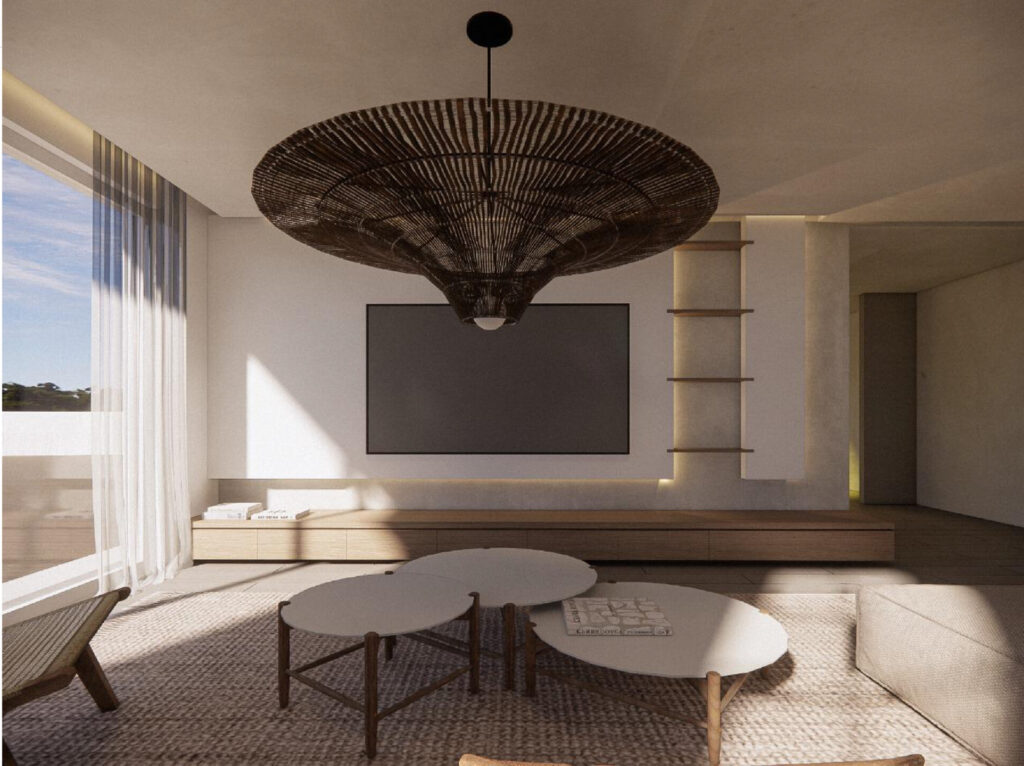
From the opposite angle, the family room reveals the long media wall — a continuous oak console flanked by recessed strip-lit shelving and a wall-mounted screen. The bouclé coffee tables cluster like river stones in front of the sofa. Nothing competes for attention; everything settles into its place.
The Bar Pavilion.
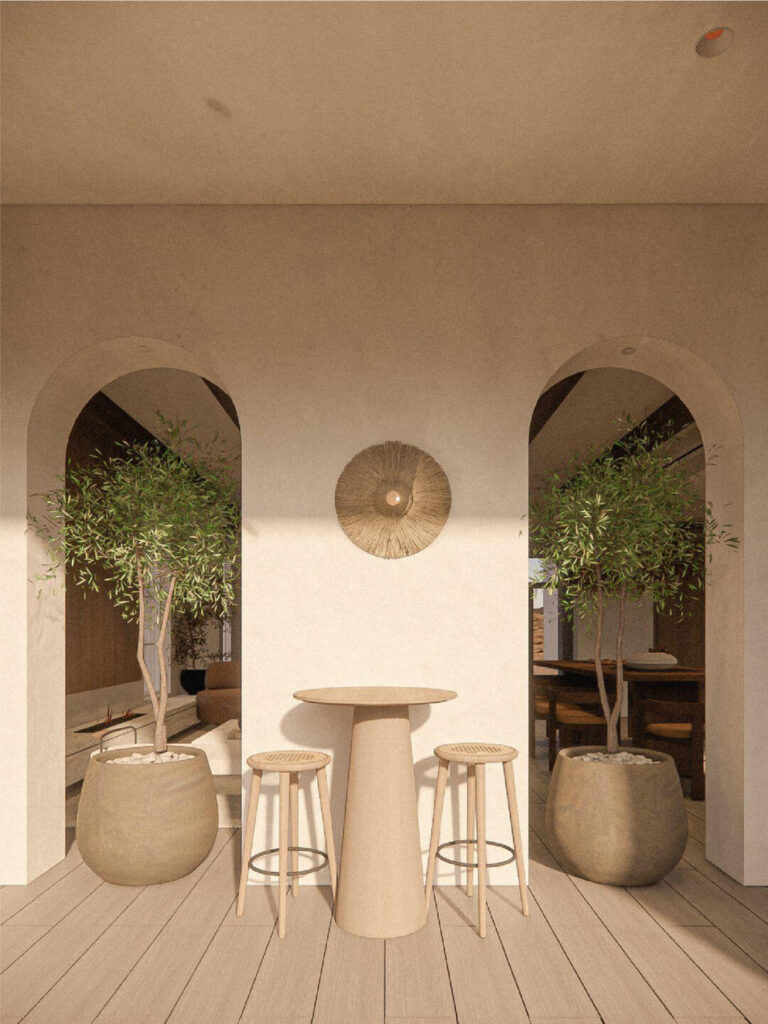
A small standalone bar room sits between the living spine and the outdoor terrace — twin arched openings, a sculptural plaster wall hanging, and three woven stools clustered around a single round table in pale stone. The bar was conceived as a transition space: indoor in its finish, outdoor in its mood.
Where Indoor Meets Outdoor.
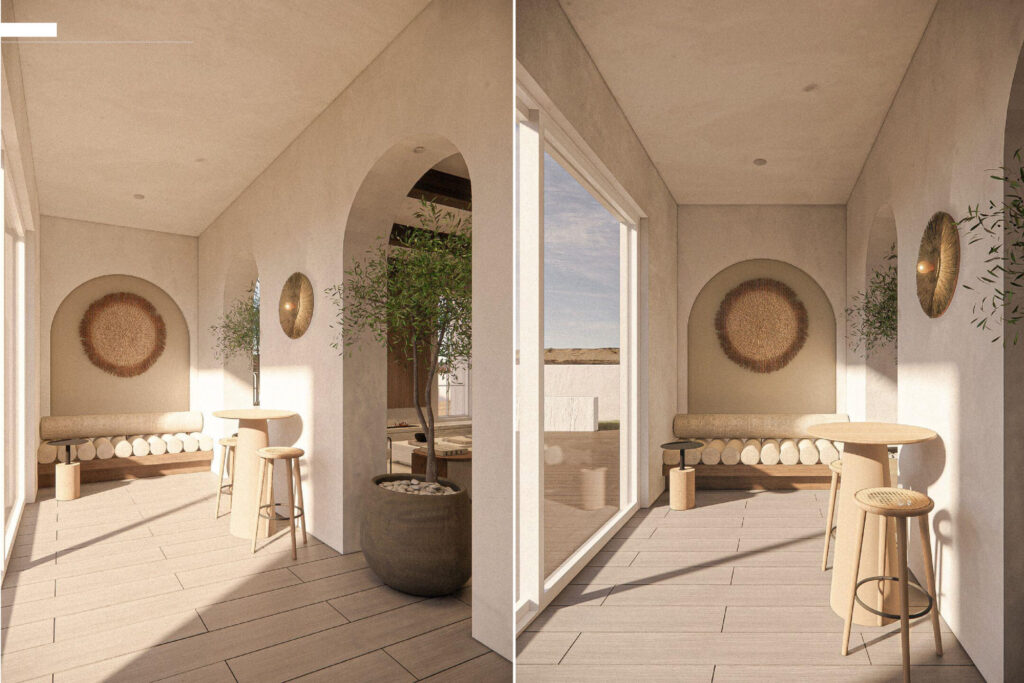
From the other side, the bar opens directly to the terrace through full-height sliding glazing. A long built-in bench in pale stone runs the back wall, finished with the same arched alcove and sculptural wall piece. The room reads as a small architectural pavilion — calm, framed, deliberately incomplete without its garden view.
The Study.
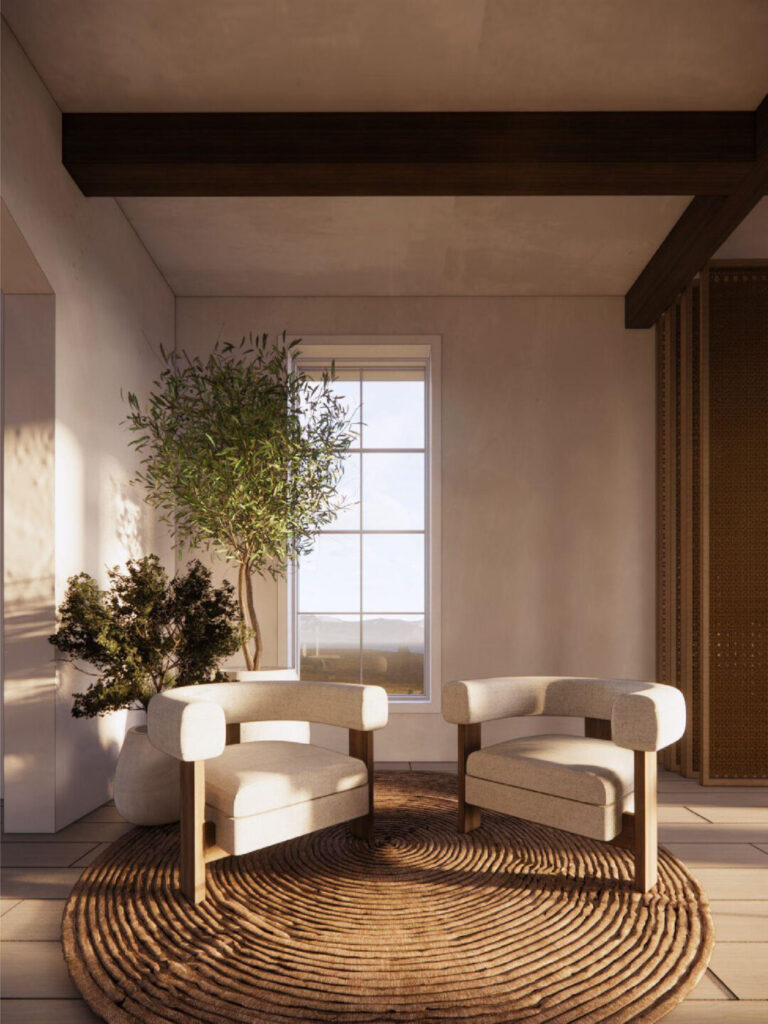
The ground-floor study takes a warmer, more rustic register — exposed dark timber ceiling beams, woven cane screen panels, full-height windows framing the desert, and a low daybed beside the desk. A second seated lounge in pale linen sits across the room, anchored by a circular jute rug. The room was designed to feel less like an office and more like a writer’s retreat.
The Powder Room.
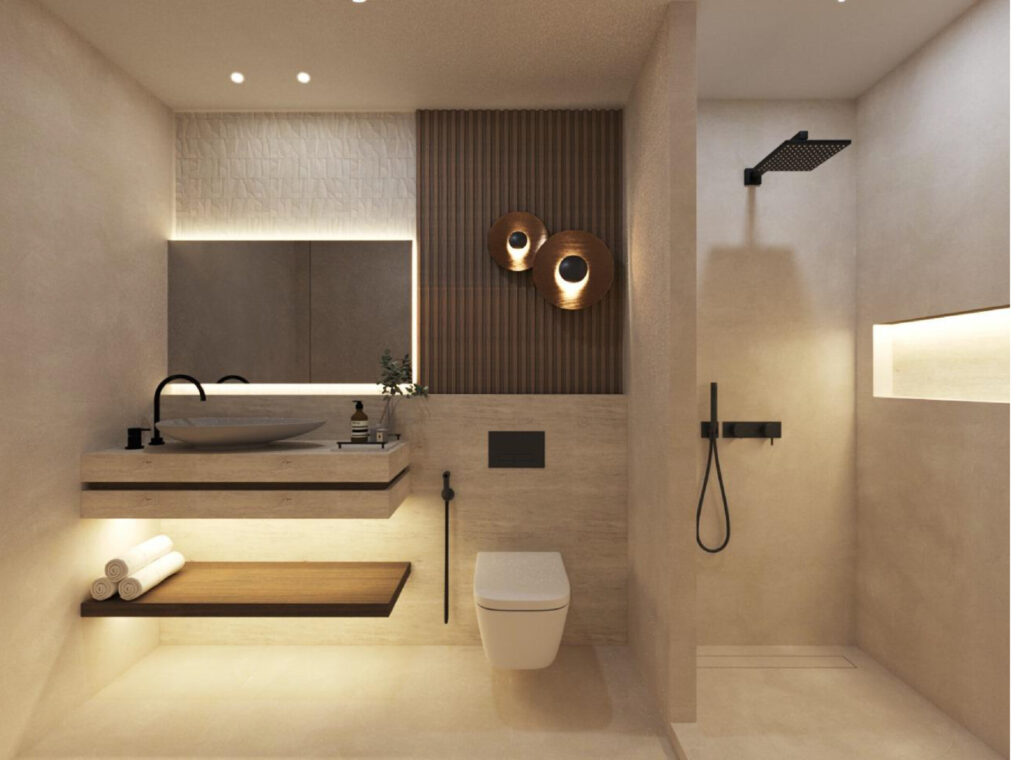
The ground-floor guest powder room is treated as a small jewel box. A washed plaster wall with a recessed mirror, twin sculptural sconces in bronze, a stone counter floating above pale oak joinery, and a fluted timber accent panel beside the WC. The shower is set behind it as a separate moment — a single niche, a single fixture, the same disciplined hand.
The Powder Room, In Detail.
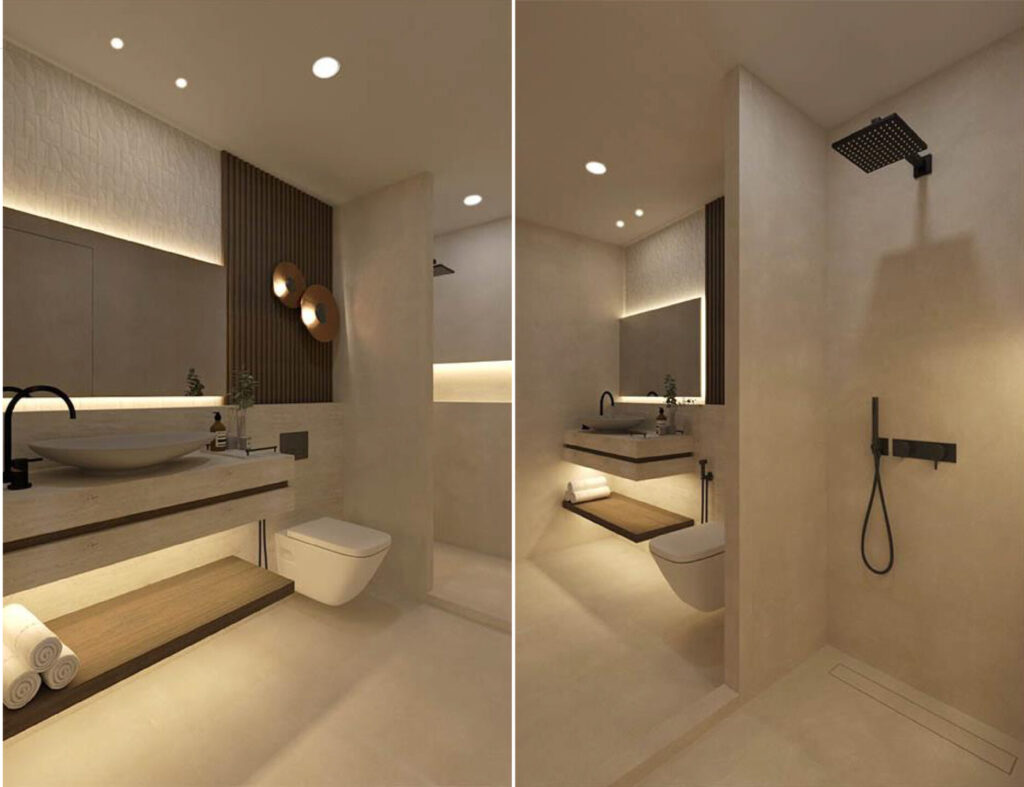
Closer in, the room reveals its discipline — concealed strip-lit niches, rolled towels stacked on a timber shelf, the soft glow of warm under-lighting from below the vanity. A single artwork panel and a fluted feature wall do all the decorating. Everything else is architecture.
The Master Suite.
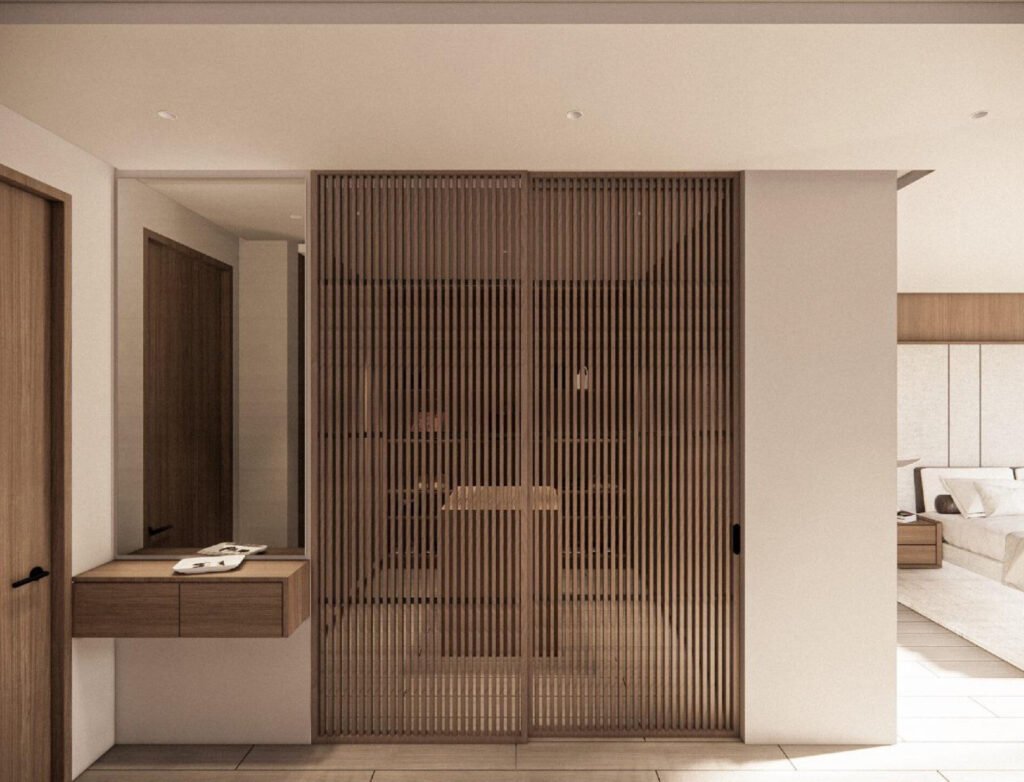
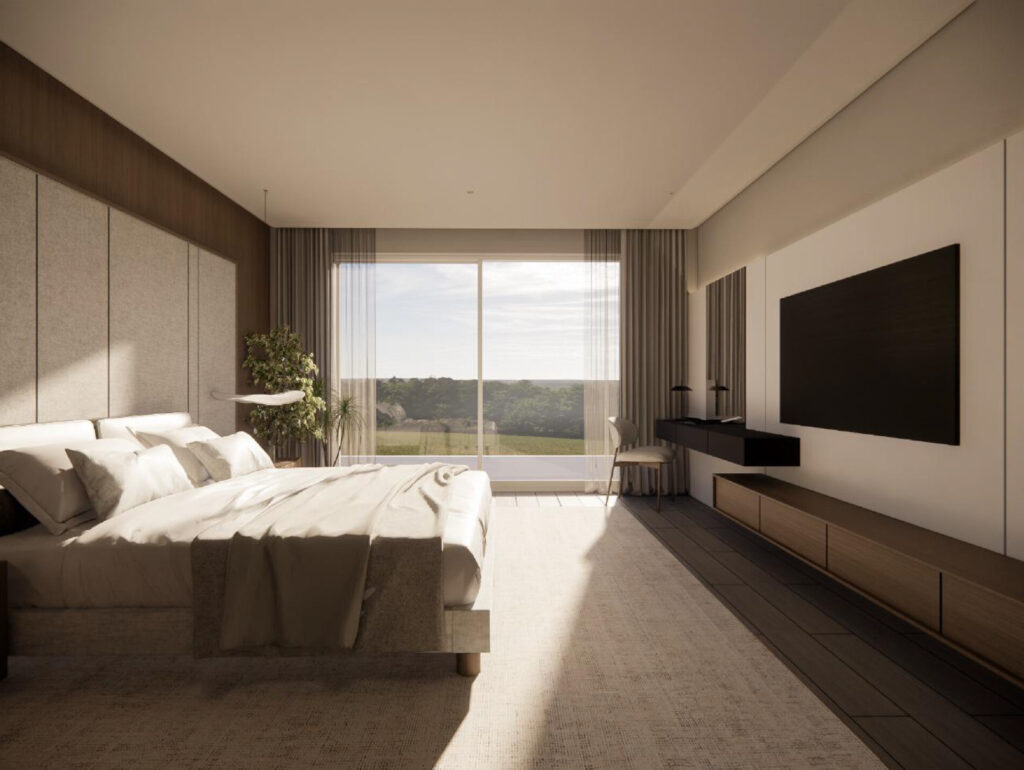
Upstairs, the master suite opens behind a full-height fluted timber screen door — a quiet ceremonial threshold that separates the private wing from the rest of the home. Beyond, a generous bedroom with full-height glazing onto the desert horizon, a low platform bed, a linen-panelled headboard wall, and a floating dark oak media console opposite. Restraint, scaled up.
A Bedroom Built for Quiet.
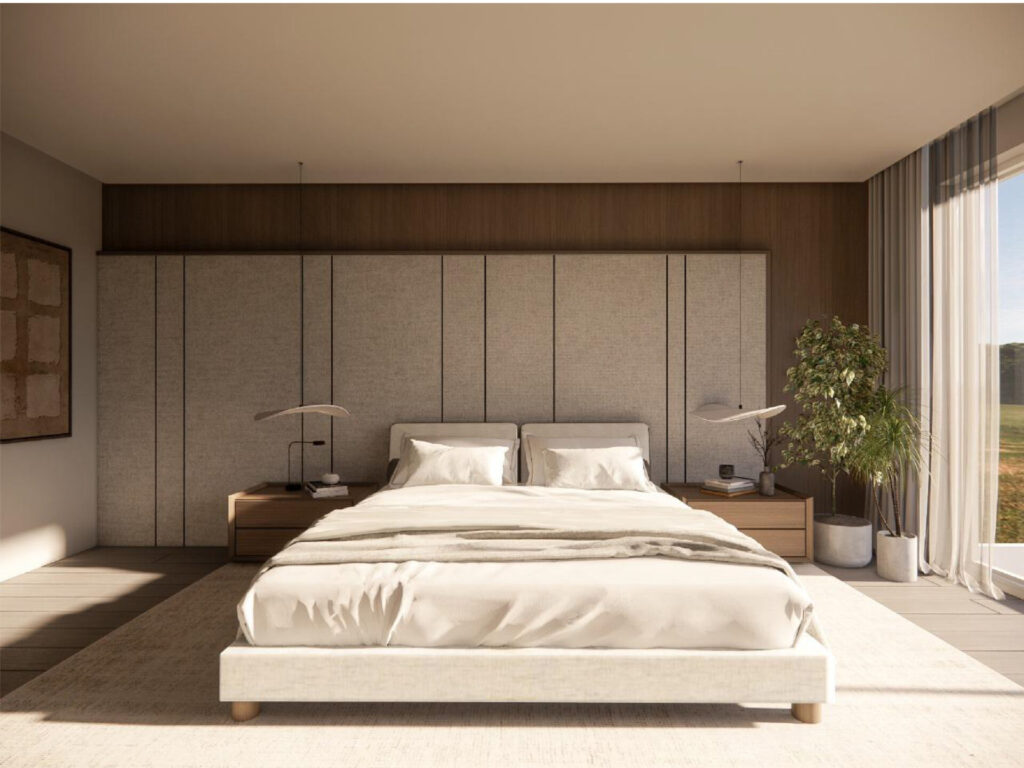
The master bedroom holds its register through material discipline — linen-panelled walls, fluted timber backdrop, soft layered drapery, and a low upholstered platform bed dressed in pale neutrals. Light is layered into the architecture: concealed coves, soft uplight on the back wall, no overhead fixtures. The room reads less like a bedroom and more like a private chamber.
Layered in Linen.
From the opposite angle, the master reveals a panelled feature wall in textured linen — a full-height composition of soft vertical panels behind the bed, anchored by twin sculptural table lamps. A framed artwork to the side breaks the rhythm. The palette is held entirely in cream, oak, and warm shadow.
The Master Lounge.
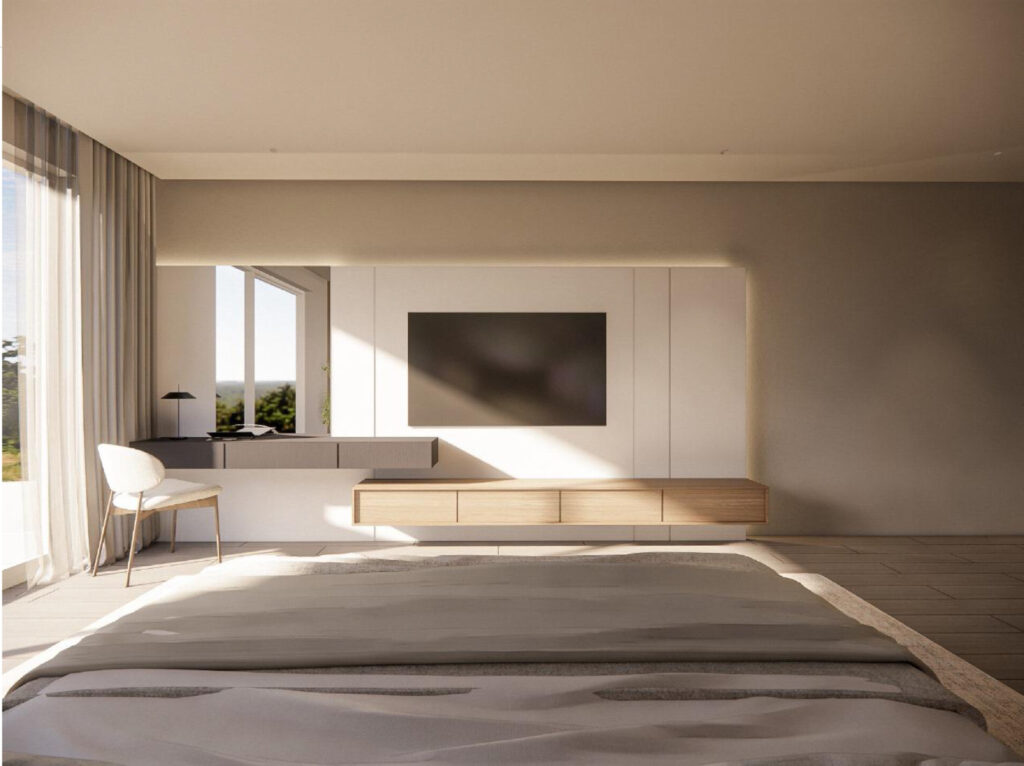
Opposite the bed, the master suite carries its own small lounge moment — a built-in desk and reading bench in pale oak, a sculptural task lamp, and a single bouclé chair beside full-height sheers. The TV wall floats above the console, concealed behind a recessed strip light. Designed as the room within the room.
The Suite in Full.
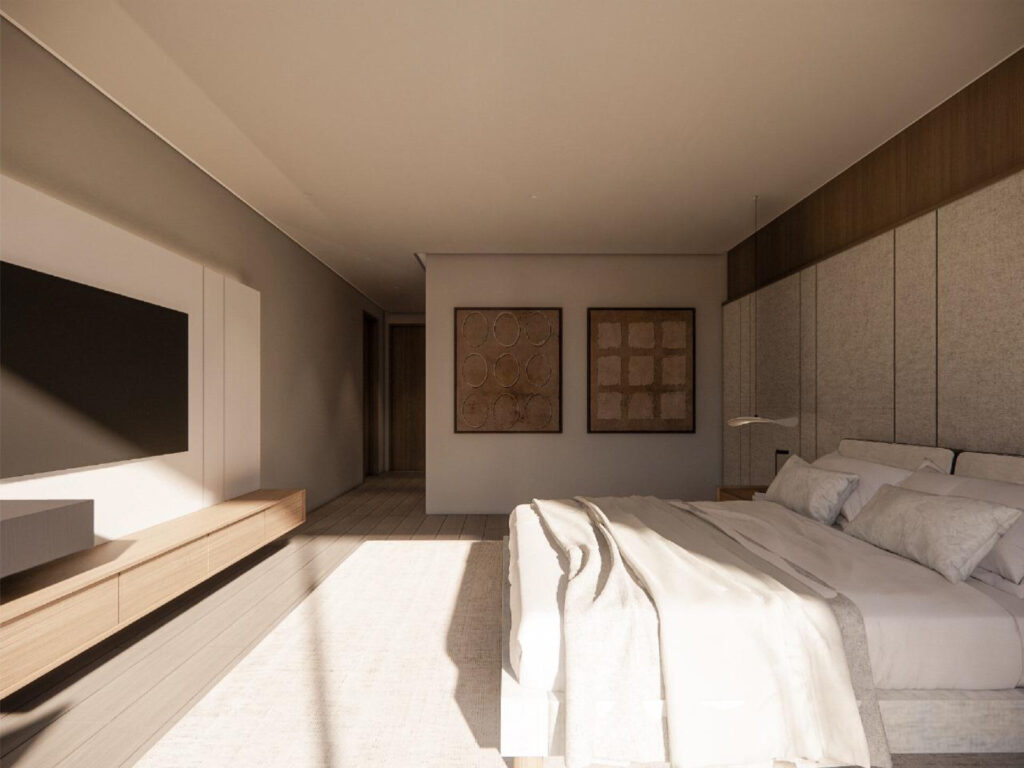
A final view of the master ties the suite together — the long media console floating against the dark oak feature wall, twin framed artworks above, and the linen-panelled bed-wall returning in the distance. The architecture does the decorating; the room needs nothing more.
The Walk-In Closet.
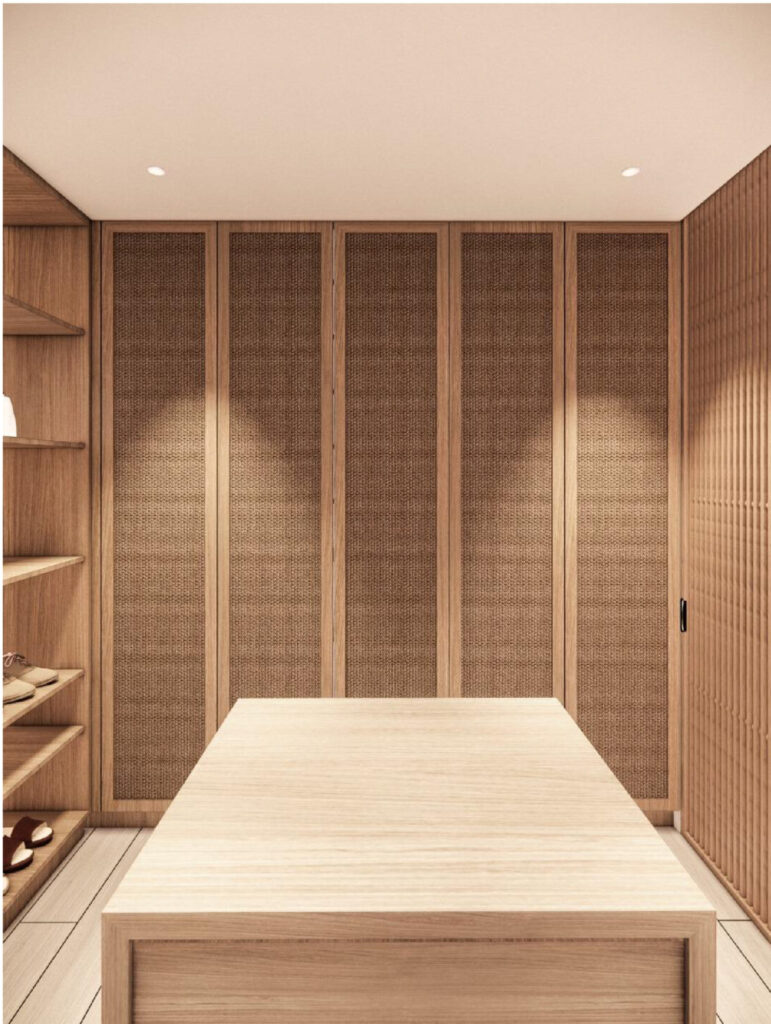
The master walk-in is treated as a small private boutique — full-height wardrobes finished in pale oak with woven cane inset panels, an island in solid timber at the centre, and concealed downlights washing each bay individually. Designed to feel closer to a dressing room than a storage cupboard.
The Master Bath.
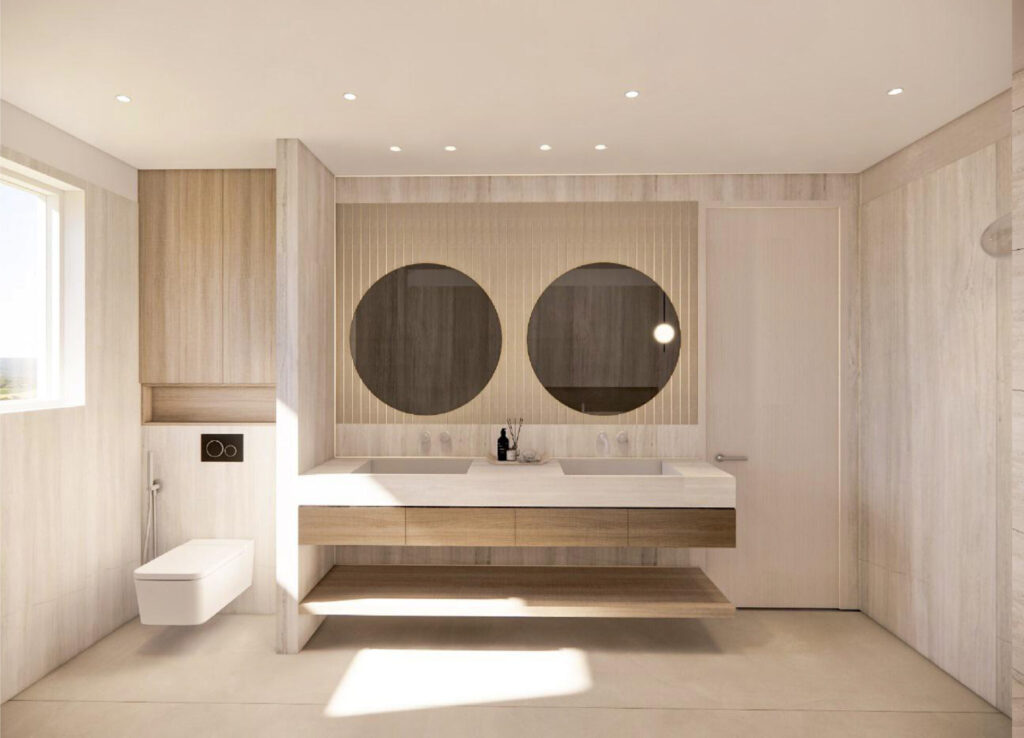
Spa-grade throughout. Travertine cladding floor to ceiling, a long floating vanity in pale oak with twin circular mirrors set into a fluted timber backdrop, and a wall-hung WC with concealed cistern controls. The architecture does the decorating — there is almost no styling because the stone carries the room.
A Tub Set in Stone.
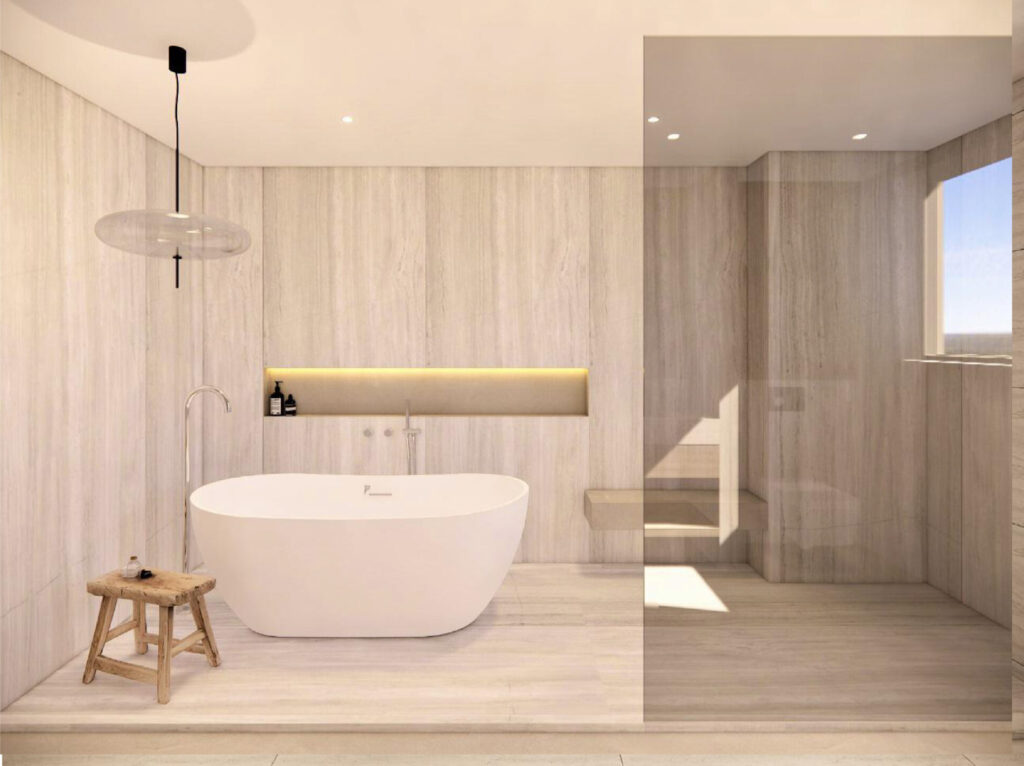
At the far end of the master bath, a freestanding sculptural tub sits against a full-height travertine wall — a single concealed strip-lit shelf for amenities, a sculptural pendant of layered glass discs above, and a glazed shower enclosure to one side. A small timber stool replaces the usual styling. The room reads as a single material composition.
Bedroom One.
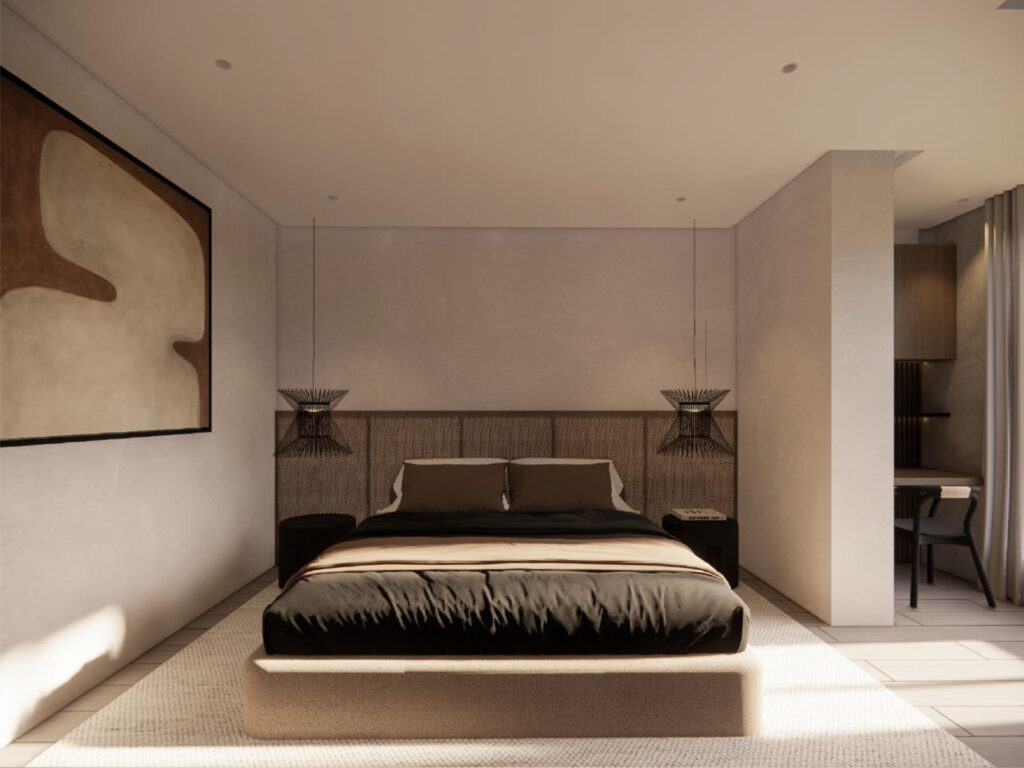
The first guest bedroom takes a darker, more sculptural register. A long-framed abstract artwork anchors the bed-wall, woven headboard panels in deep tone, twin black ironwork pendants flanking the bed, and a low platform frame in cream upholstery. Designed for guests of consequence: private, quiet, unmistakably layered.
A Room with Reflection.
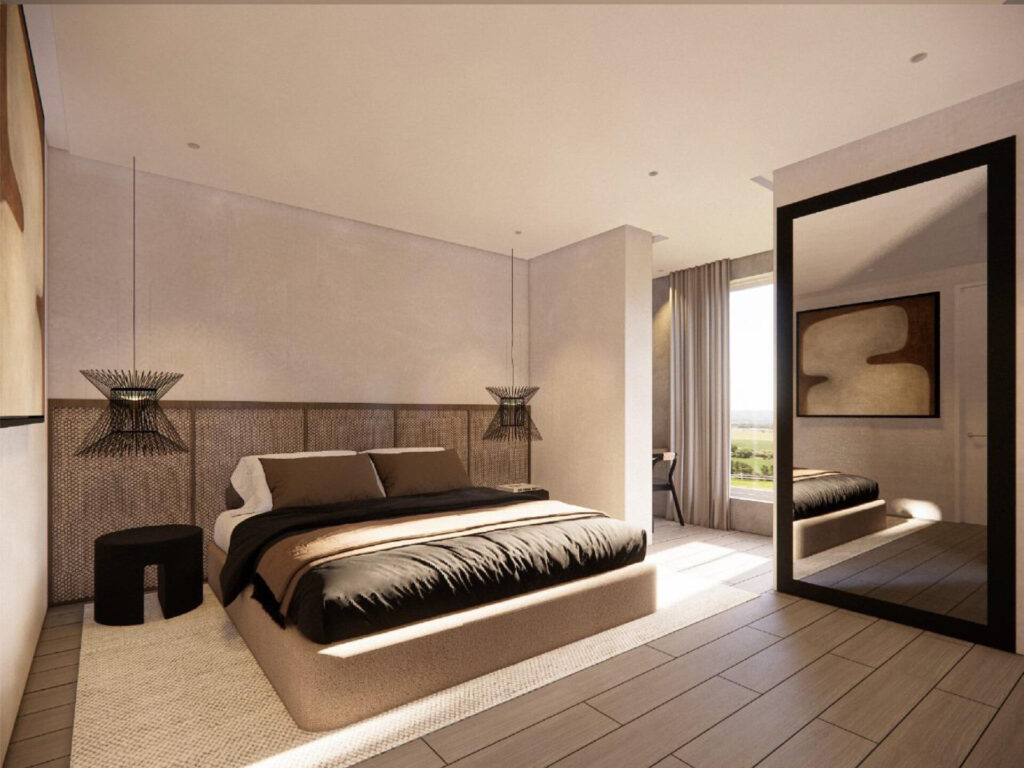
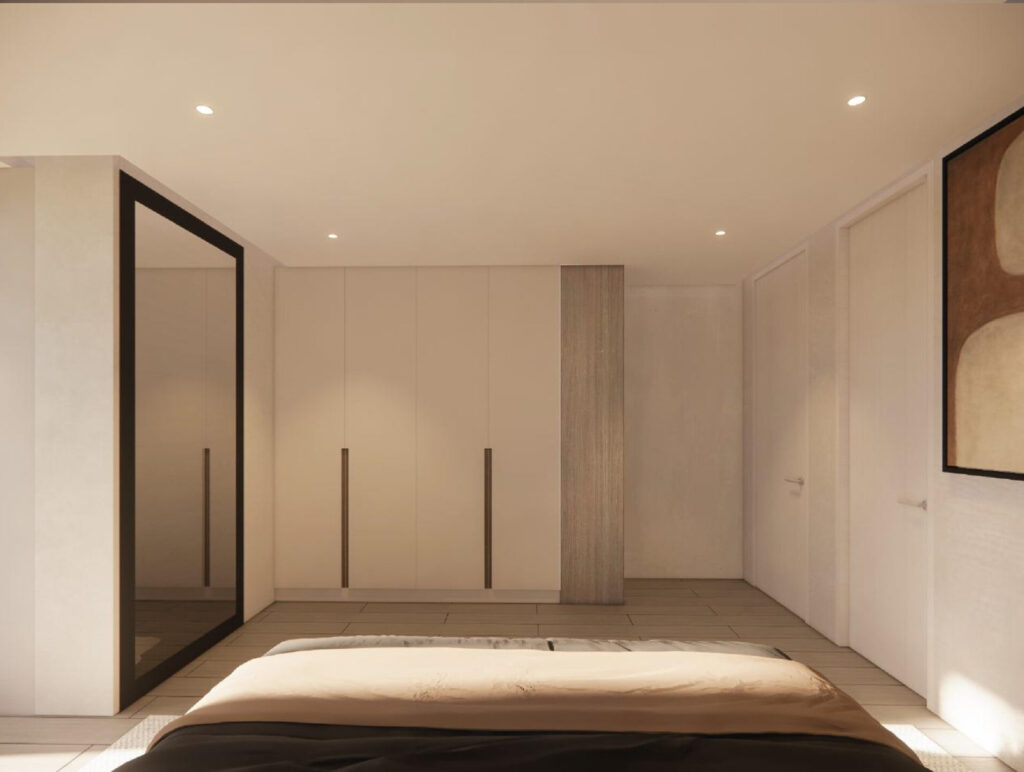
From the side, bedroom one reveals a full-height black-framed mirror — a single architectural object that doubles the room’s depth and brings the desert light from the window across to the far wall. The same twin pendants, the same low bed, but suddenly the room reads as two.
Concealed Wardrobes.
Opposite the bed, the wardrobe wall is treated as architecture rather than furniture. Full-height flush panels in pale cream with a single timber accent column, a framed mirror set flush into the wall, and concealed handles throughout. Everything disappears.
A Study Within the Suite.
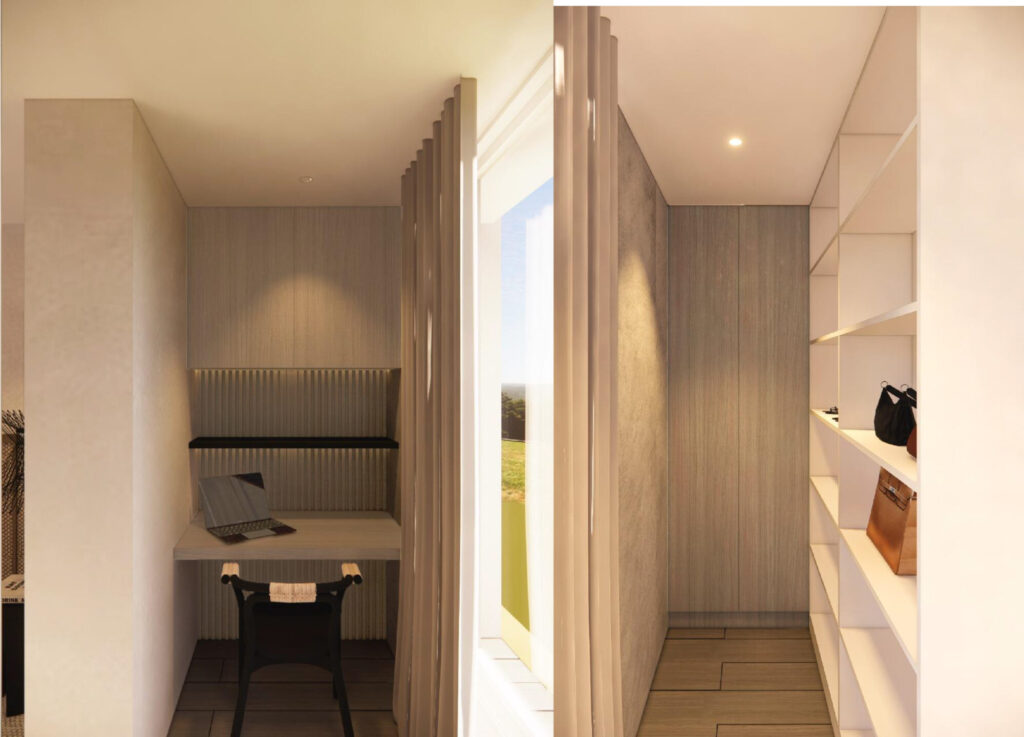
Bedroom one carries its own small workstation and walk-in alcove — a sculptural fluted timber screen separating the desk from the wardrobe, a floating shelf and bench in pale stone, and an open shelving wall holding bags and accessories beyond. Each guest suite was designed as its own complete environment.
Bathroom One.
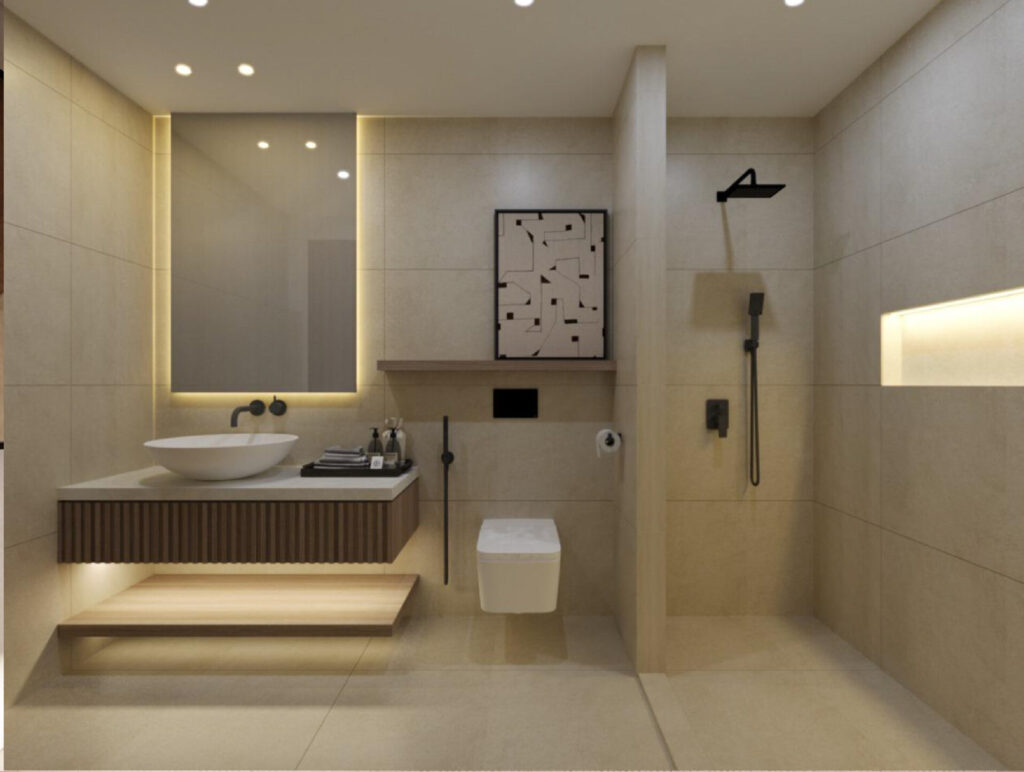
The ensuite to bedroom one shifts register again — warm beige stone walls, a fluted timber vanity console with a vessel basin, a backlit mirror set against the same fluted backdrop, and a black-framed shower niche with matte black fixtures. A small artwork panel sits beside the WC. Designed as the room’s own small architectural moment.
Bedroom Two.
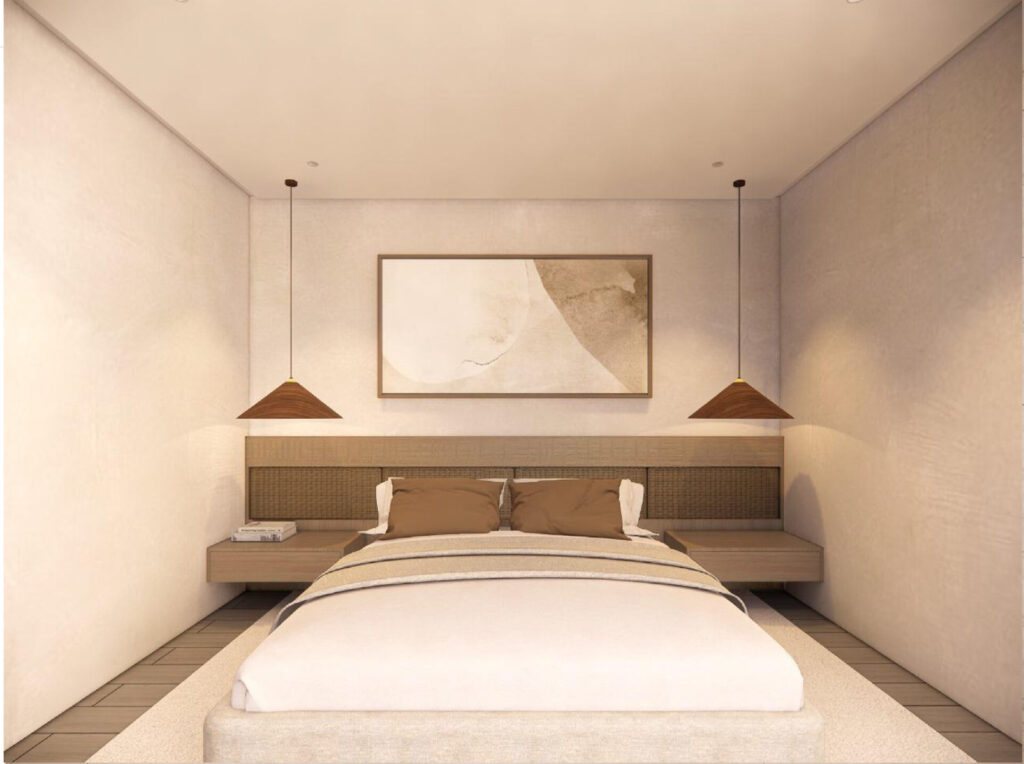
The second guest bedroom takes the softest register of the three — pale plaster walls, a low platform bed, twin terracotta cone pendants, a framed abstract artwork above the headboard, and a built-in console running the full width of the bed-wall. A room designed for sleep.
The Quiet Wardrobe.
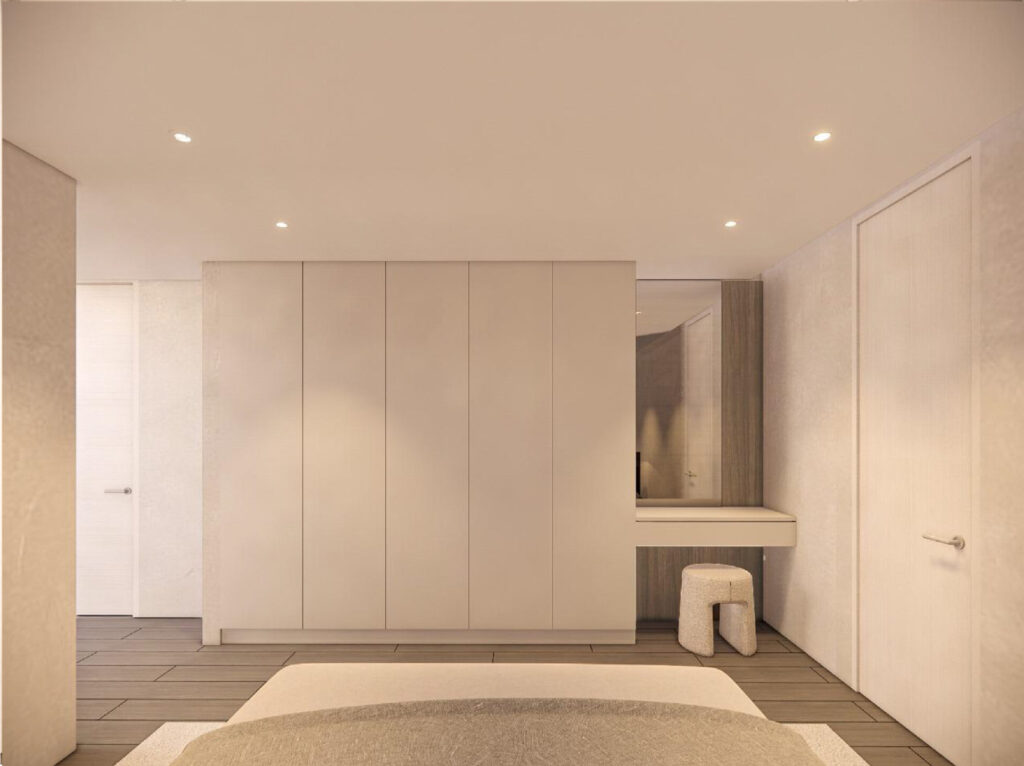
Opposite the bed, the wardrobe wall in bedroom two is treated as architecture in its purest form — flush full-height panels in soft cream, a single timber accent strip, a small floating vanity bench with a sculptural stool, and warm uplight washing the back wall. The room asks nothing of you.
Bathroom Two.
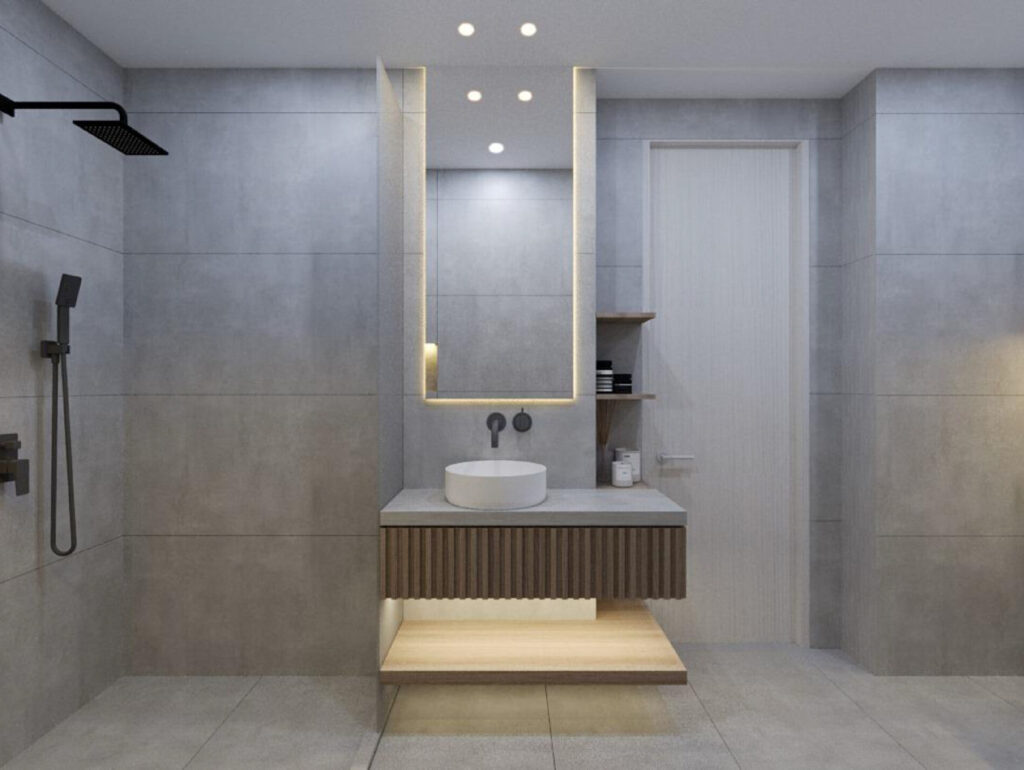
A cooler, more masculine ensuite — full-height concrete-effect grey porcelain cladding, a vertical illuminated mirror, a fluted timber vanity console with a vessel basin, and matte black brassware throughout. The shower wall opposite holds a single concealed wall niche with strip lighting. Calm, disciplined, deliberately stripped back.
Bathroom Two, Continued.
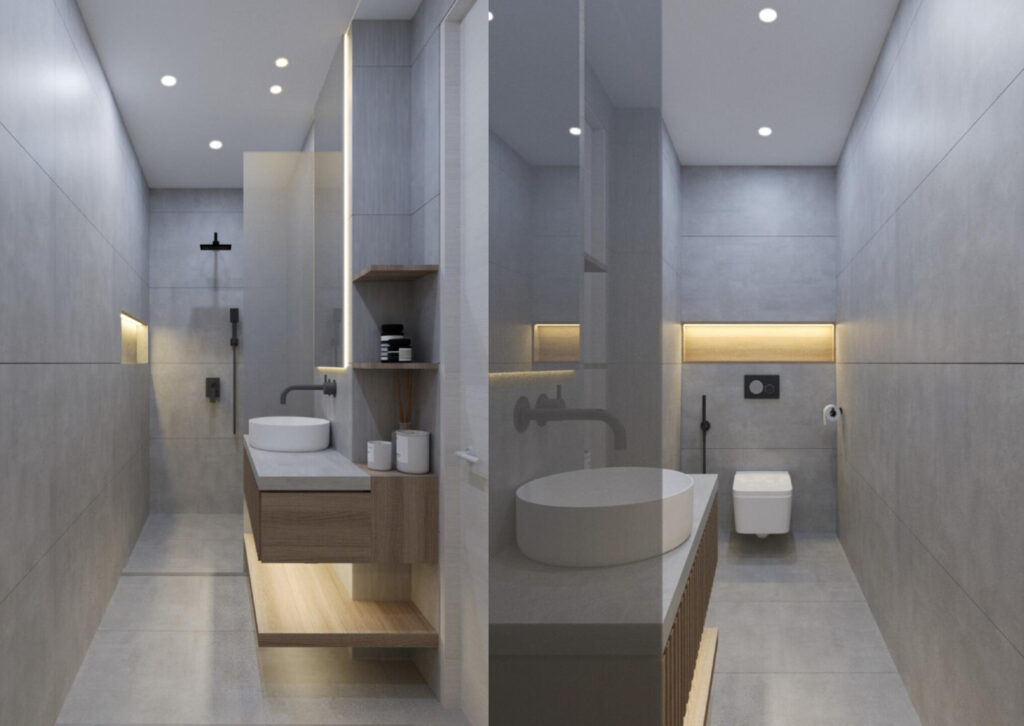
From the other angles, bathroom two reveals its full composition — the walk-in shower with linear floor drain, a wall-hung WC with concealed cistern controls, and the floating vanity bench beneath the timber console. Three views of the same disciplined material logic.
Bedroom Three.
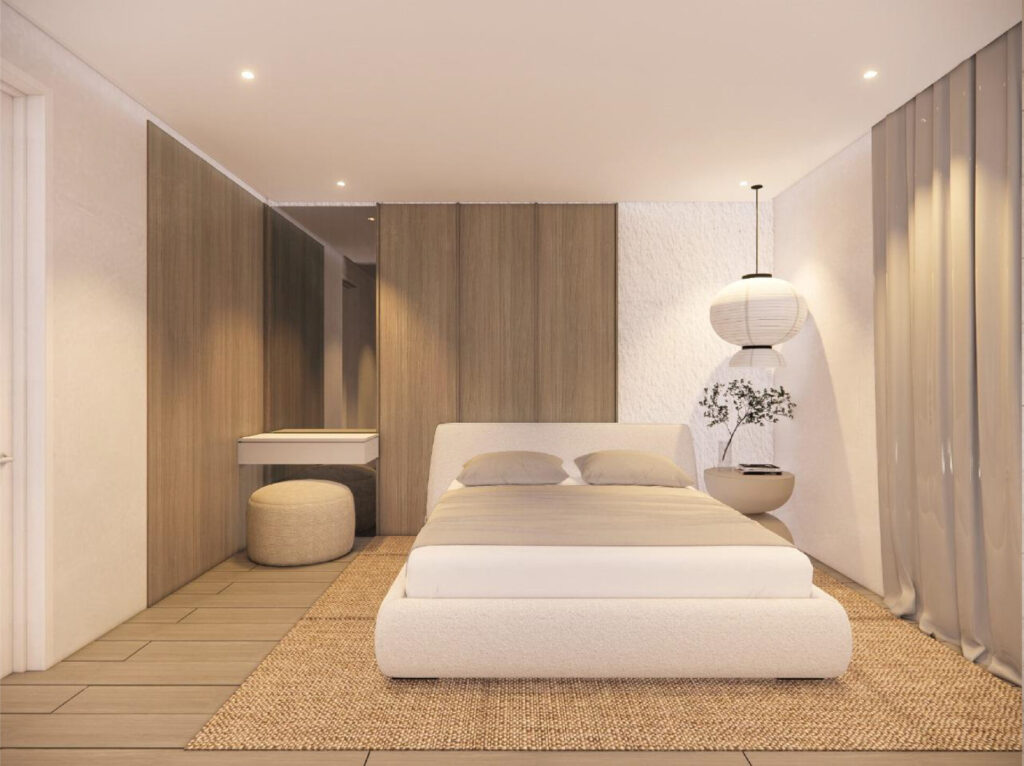
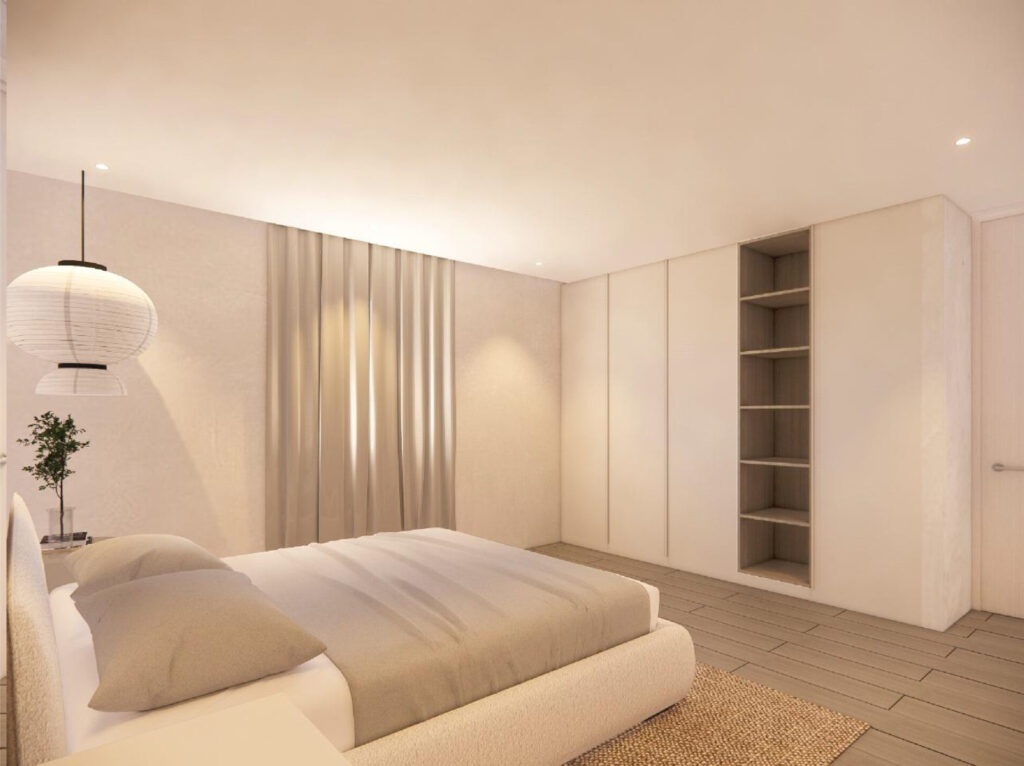
The third bedroom is the warmest of the upstairs suites — pale oak panelling on the bed-wall, a soft cream upholstered platform bed, a single rice-paper Akari pendant beside the headboard, and a small console with sculptural ceramic styling. A full-height curtain returns the room to softness.
A Room of Soft Daylight.
From the side, bedroom three reveals its other half — full-height sheer drapery framing the morning light, an open shelving column in pale oak, and the second Akari pendant casting a small pool of warm light on the bedside. The room is built around stillness.
Bathroom Three.
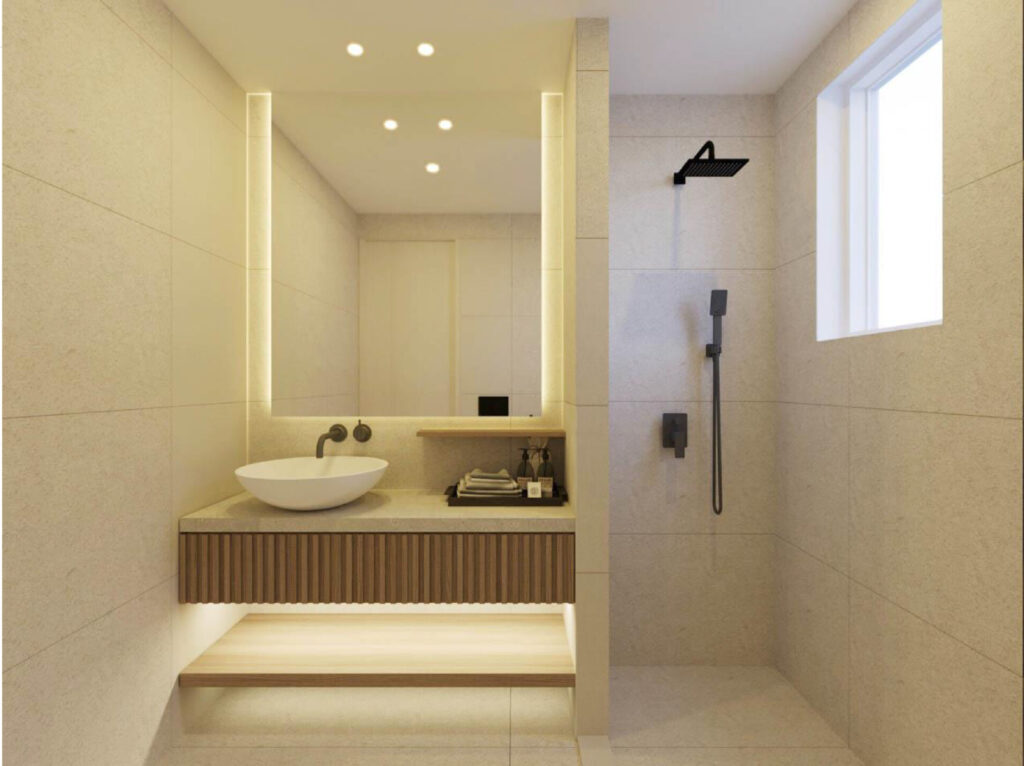
The ensuite to bedroom three takes the warmest tone — pale beige stone walls, a backlit illuminated mirror, a fluted timber vanity console with a vessel basin, and a walk-in shower in matte black hardware framed by a small operable window. Designed to feel less like a bathroom and more like a quiet alcove.
Bathroom Three, Closer.
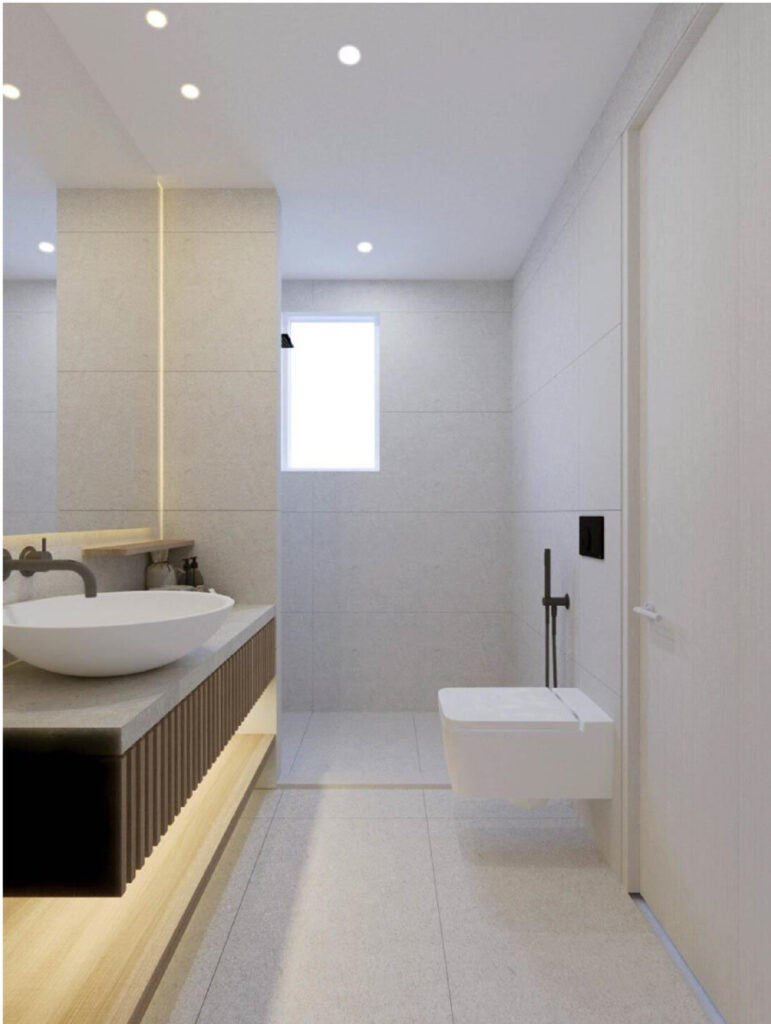
From the shower side, bathroom three reveals the wall-hung WC with concealed cistern controls, the same fluted vanity console floating opposite, and a single high window casting morning light directly onto the stone floor. The same disciplined hand, the warmest material register.
Start Your Journey
Every dream home begins with a single conversation. Whether you’re envisioning a new build or transforming an existing space, Creative Corner brings the expertise to make it real — from concept sketches to final handover.